

How should brands show up in entertainment when nobody can predict what the next cultural phenomenon will be?
For our own Grant Regillo, our VP of Brand Partnerships, the answer starts with changing the way brands think about entertainment altogether.
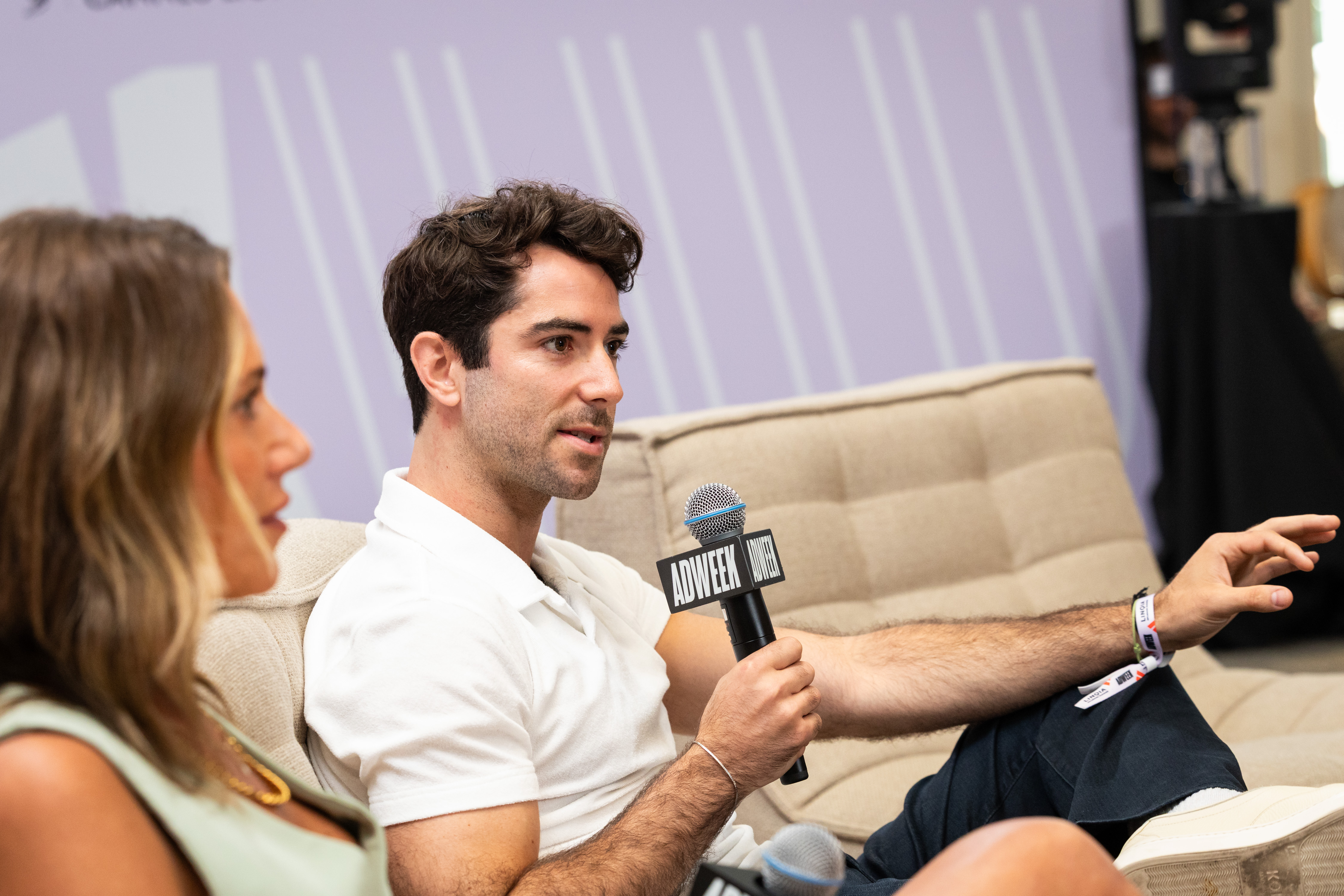
Speaking at ADWEEK House alongside leaders from e.l.f. Beauty, BERO, Happy Dad and Noble Pacific, our panel emphasized that entertainment shouldn’t be treated as a collection of one-off opportunities. The brands that win are the ones building a consistent presence long before a show premieres, a trend takes off, or everyone else decides they want in.
Stop Chasing Culture. Get There Earlier.
It’s easy for brands to look at an established franchise like The White Lotus or Ted Lasso and know you want your brand involved.
The harder part is recognizing the next one before everyone else does.
As Grant explained, culturally relevant projects are incredibly difficult to predict. When a show is still months away from release, marketers don’t have viewership numbers, social conversation, or cultural impact reports to point toward.
What they do have is judgment.
“It’s your intuition to understand that these projects have a real potential to be super relevant.”
.jpg)
Grant pointed to projects like Heated Rivalry as an example. A brand can wait until a title becomes part of the cultural conversation and then compete with every other marketer trying to capitalize on it. Or it can be involved nine or twelve months earlier, creating an opportunity to actually exist within the content audiences eventually fall in love with.
That difference matters.
Build a Foundation, Not a Moment
At EightPM, we work across roughly 300–350 shows and films each year. That scale gives brands something more valuable than a bet on one title: optionality.
Instead of prioritizing a single placement, brands can build a diverse foundation of authentic integrations across genres, platforms, studios and audiences.
Those integrations then become the starting point for something bigger.
Limited-edition products. Collaborations. Experiential activations. Social amplification. IRL moments.
As Grant explained, when brands already have a broad foundation inside entertainment, those larger activations become more natural because the storytellers have already chosen to feature the brand within the content itself.
We’ve seen that strategy work at different stages of a brand’s life.
When EightPM began working with OLIPOP five years ago, the brand was only beginning to appear on shelves. Entertainment became a way to intentionally establish OLIPOP as a modern soda rather than simply another health drink. For legacy brands, the opportunity can look different: integration can help ensure entertainment reflects what the brand represents today, rather than relying on an outdated perception.
Being Part of Culture Requires Participation
Entertainment is going to tell stories about the products, technology and behaviors shaping everyday life whether brands participate or not.
Grant used emerging technology as an example: writers and creators will naturally write from what they know and perceive. Brands that engage early can become educators and collaborators, helping creators understand how their products actually fit into the world without turning the story into an advertisement.
That’s ultimately the opportunity.
The goal isn’t to force brands into entertainment. It’s to identify the moments where they already belong and make it easier for storytellers to choose them.
Because the next cultural phenomenon is almost impossible to predict.
Being positioned to participate in it isn’t.
%20(1).jpg)
